Photo courtesy: Qantas
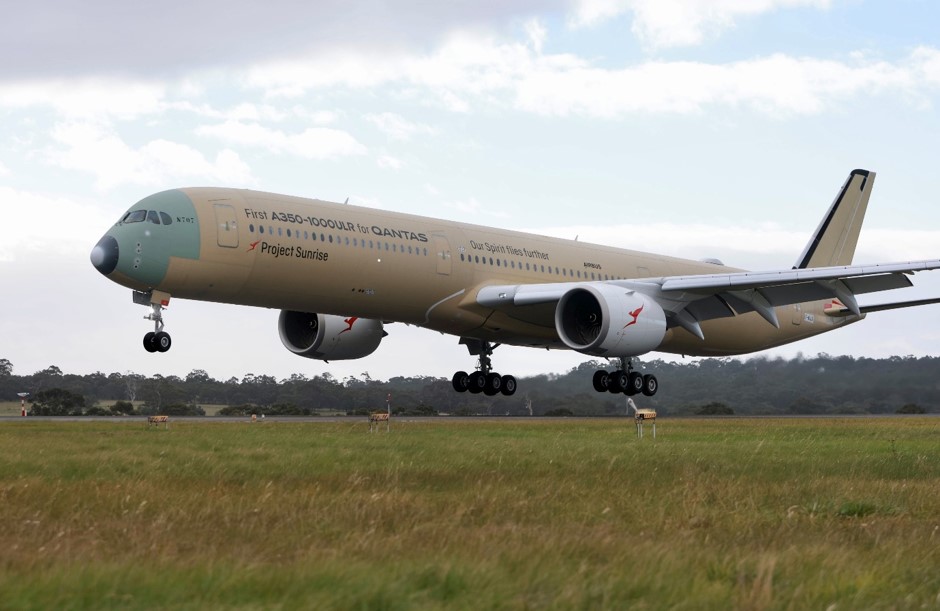
Qantas has just brought one of aviation’s most watched aircraft to Melbourne, and for Australians it is a seriously big deal. The airline’s first Project Sunrise A350-1000ULR landed after a non-stop test flight from Toulouse, moving the dream of direct flights to Europe and North America much closer to reality.
Why this milestone matters
For travellers in Australia, long-haul flying has always meant compromise: stopovers, fatigue, and lost time before the holiday even begins. Project Sunrise aims to change that by making direct ultra-long-haul travel not just possible, but practical for everyday passengers. That is why this landing feels less like a technical update and more like a shift in how we connect to the world.
Qantas is using this test flight to prove the aircraft’s systems over an endurance run of around 23 hours, including pressurisation, air conditioning, and fuel performance. The aircraft carries an extra 20,000 litres of fuel and has been configured with fewer seats, more legroom, a wellness area, and cabin conditions designed to help passengers arrive in better shape.
A new way to fly
The A350-1000ULR is being positioned as a different kind of long-haul experience, one that leans into comfort rather than simply endurance. Qantas says the cabin altitude is set lower than many aircraft, with improved humidity, filtration, and mood lighting designed to support the body clock on extremely long flights.
That matters when you are spending nearly a day in the air. The goal is not just to survive a 20-hour journey, but to make it feel more humane, more restful, and more suited to the realities of modern luxury travel.
The bigger picture

If all goes to plan, Sydney–London non-stop is expected to launch in October 2027, with New York following soon after. Once operational, Sydney–London will become the longest non-stop passenger flight in the world, overtaking Singapore Airlines’ Singapore–New York service.
For Australia, the significance goes beyond bragging rights. Direct access to Europe and North America means less transit stress, more usable travel time, and a stronger sense that Australia is finally getting closer to the global hub life so many travellers take for granted elsewhere.
What happens next
The first aircraft’s delivery has already slipped, with more jets to follow in sequence, and Qantas will need three aircraft per route to operate daily services. Even so, the momentum is clear, and the airline is treating this as the start of a new long-haul era rather than a one-off experiment.
As Qantas Captain Alex Passerini put it, the flight is about proving the aircraft for regulators and Airbus, not discovering whether the concept works. The answer, at this stage, looks to be yes — and for Australians, that is a very exciting yes indeed.
Visit the airline here: Qantas
 United Economy Plus Redefines Space With Extra Elbow Room
  Air New Zealand Reveals New 777 Cabins for Luxury Travel
  Qatar Airways Completes Australia Comeback With Canberra Return
  Inside Emirates’ Next-Gen Luxury Airport Lounge Experience
  Riyadh Air Expands to Málaga & Kuala Lumpur
  Riyadh Air Commences Daily Dubai-Riyadh Flights as Inaugural Flight Takes Flight
 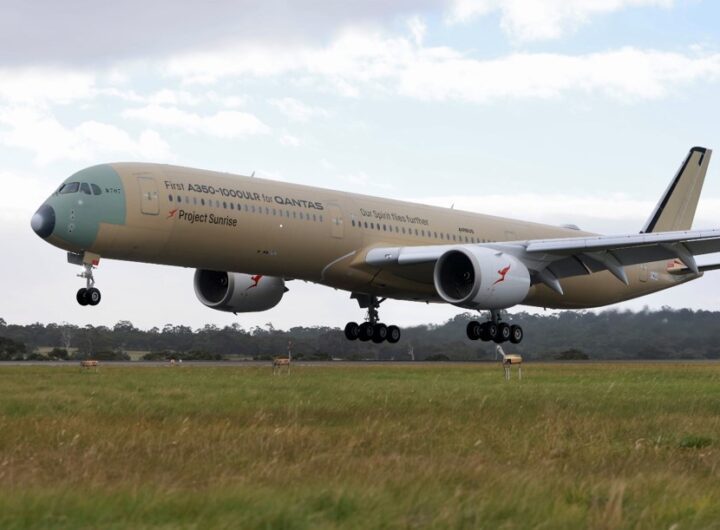 Qantas Project Sunrise Makes History on the Melbourne Runway
  8 Smart Ways Travellers Can Save on Flights
  APT Ostara Christening: Europe’s New Luxury River Icon
  Viking 2030 Oberammergau Voyages Blend Culture and Luxury