Following Ukraine’s invasion, the European Union restricted its airspace to all Russian airlines and Russian-owned and operated aircraft, and Russia soon after restricted its airspace to all European aircraft. Since then, many countries, including Canada, have followed the EU’s lead, increasing the number of planes and flights affected.
Travellers to and from Russia will feel the most significant immediate impact. Many flights have been cancelled, and some have been forced to return home. When the restriction was imposed, one Aeroflot flight was approaching Canadian airspace and had to return to Russia.
Another Aeroflot flight from Miami to Moscow was allowed to cross Canada by mistake. The regulating authority, NAV Canada, accepted the error and stated that corrective action had been taken to prevent it from happening again.
Aeroflot has begun cancelling flights to their four US destinations (New York, Washington, Los Angeles, and Miami) and Cancun, Mexico, and Punta Cana, Dominican Republic, as a result of losing access to Canadian airspace.
Last week, Delta Air Lines also terminated its code-sharing deal with Aeroflot, Russia’s government carrier.
During his State of the Union address, President Joe Biden stated that the United States would close its airspace to all Russian flights, joining a growing number of countries worldwide that have made similar actions in recent days.
More repercussions of airspace closure include rerouting some flights, which adds travel time and fuel expenses.
Flights from London to Asia, for example, are now taking routes further south through Turkey and the Middle East to avoid Russian airspace. Polar flights from the United States to Asia can no longer use Russia as a stopover. In an emergency, such as engine failure, no Russian airport can serve as a diversion airport.
Long Range Operational Performance Standards grade aeroplanes based on their time to reach the nearest diversion airport. The maximum for newer, more efficient long-haul aircraft, such as the Airbus A-350, is 370 minutes, and the restriction is lower for smaller twin-engine planes.
Russian airports must be available as a diversion airport for some arctic flights. The loss of such airports means that flights must travel much further south and may necessitate a technical stop for fuel, significantly increasing flight duration and cost.
Of course, the airspace over Ukraine is closed, requiring all air traffic to avoid it.
Oil prices have already risen since the conflict began, and this will surely raise aircraft fuel prices, which will be passed on to passengers in the form of higher fares.
 Jetstar BidCash: How to Upgrade to 787 Business Class From Just $180
  Qantas Tightens Lounge Access for Jetstar Flyers from July 2026: What Frequent Travellers Need to Know
 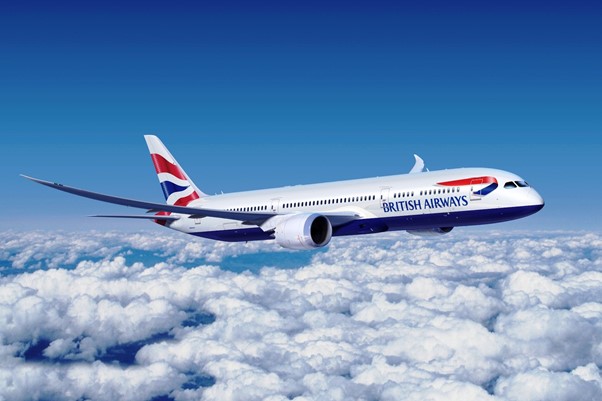 British Airways Returns to Melbourne: New Daily London–Melbourne Flights via Kuala Lumpur on the 787-9 Dreamliner
  World’s Best Airlines 2026: Qatar, Lufthansa, HK Express and Jetstar Lead AirlineRatings’ Global List
  Australia to Europe: The Most Notable Airline Routes (And How To Book Around the Chaos)
  United x Chef’s Table: World-Renowned Chefs Elevate United Polaris Inflight Dining With Exclusive New Menus
  Antarctic Voyage 2026: Save Thousands on APT’s Luxury Seabourn Venture Cruise From Buenos Aires
  Discover Asia Pacific with PONANT in 2027: Luxury Small Ship Cruises Close to Home