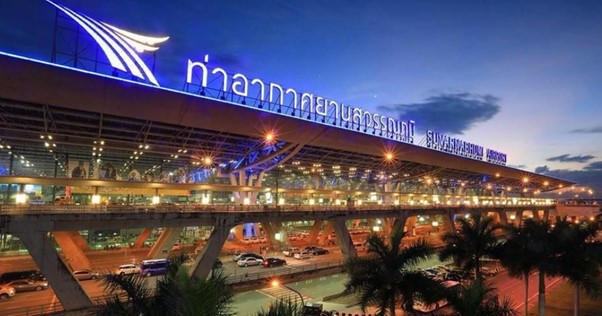
Bangkok Suvarnabhumi Airport
Unresolved payment concerns are expected to postpone the introduction of Thailand’s 300 Baht Tourism Entry Levy.
It is expected that the implementation will be delayed by around two months. Still, tour operators have stated that they would prefer to see the proposal scrapped altogether while the industry is trying to survive the pandemic at the very least.
The tourism officials designed a Tourism Development Fee of 300 Baht per arrival and approved it by the government in late 2021 after years of back and forth between various departments.
Thai officials are still trying to recruit high nett worth ex-pats and tourists, and they have convinced themselves that all the new taxes will not impact tourism arrivals.
This is not the only fee that people that a vacation in Thailand need to consider; the other hidden costs are: medical insurance for the coverage on US$1Million per person, the hefty testing fees and the potential cost of quarantining in case found positive.
According to the Bangkok Post, the 300 Baht entry levy that was supposed to kick in on April 1st is now running into roadblocks as they can’t figure out how to collect the fee.
Payment methods have not been established, so the collection of a tourism fee from foreign visitors will most likely be postponed by at least two months past the planned date of April 1st.
Tourism companies have complained that the 300-baht levy was being collected too soon, considering the industry’s sluggish recovery after the pandemic.
Tourist and Sports Minister Phiphat Ratchakitprakarn stated that the National Tourism Policy Committee meeting backed the introduction of a tourism fund utilising fees collected.
The next step is to present the policy to the cabinet. Following approval, the fee collection details must be published in the Royal Gazette.
However, implementation is likely to be delayed beyond April since airlines, who would most likely be responsible for collecting the levy, have requested at least three months to prepare. The ministry must still finalise collection methods for those entering the country by land.
The permanent tourism secretary will chair the fund committee. It will include representatives from the Budget Bureau, the Office of the National Economic and Social Development Council, the private sector, and other state agencies.
About 20% of the 300-baht cost will go towards insurance coverage for international tourists, with the remainder (50%) going towards tourism product development in Thailand.
It is unclear whether the fee will gain traction in 2022 or beyond. Tourism operators are unhappy that it includes prominent business individuals.
 Dis-loyalty: New Global Travel & Dining Membership for Aussies
 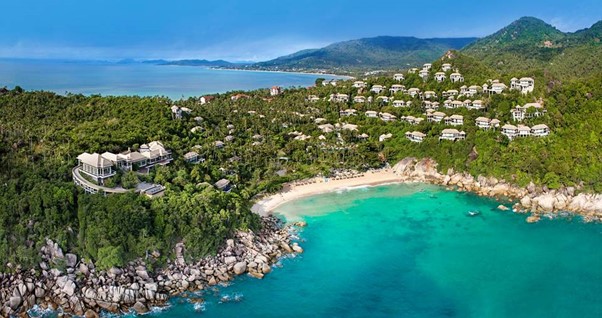 Banyan Tree Samui Crowned Best Spa Resort in Thailand 2026
  Aussies Are Jet-Setting for Free: How Frequent Flyer Points Saved Travellers $1,140 on Average Last Year
  Distil by Lebua Unveils “A Journey Beyond Time”
 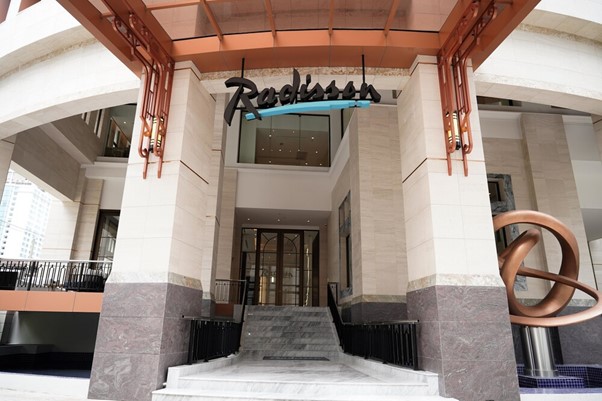 Radisson Hotel Chateau de Bangkok Reopens: A Modern Classic Returns to Ploen Chit
  Travel Tops Aussies’ 2026 Savings Goals – And That Says A Lot About Us
  Swan Hellenic West Africa voyages expand for 2026 and 2027
  Roam by Tauck Unveils 2027 Small-Group Journeys Worldwide
  Fincantieri Launches Norwegian Aura, NCL’s Largest Ship Yet
  Switzerland To Open Parc du Chocolat Cailler By 2030