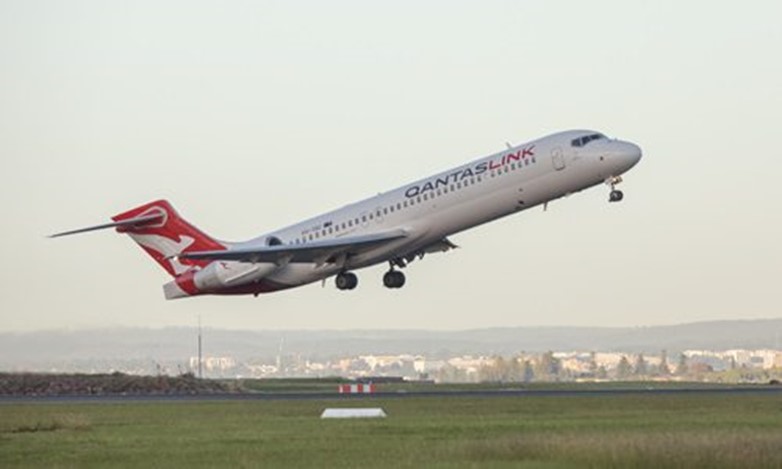
Photo courtesy: Qantas
Last Saturday marked the end of an era for the Qantas Group as the last remaining QantasLink Boeing 717 jet took to the Australian skies for its final passenger flight. The historic flight, QF1511, landed in Canberra at approximately 18:00, operated by a crew with over 100 years of combined experience flying the 717 in Australia.
The final journey of the Boeing 717, affectionately named ‘Great Otway National Park’ (registration VH-YQS), included stops in Sydney, Launceston, and Canberra. Over its nearly 11 years of service, this aircraft completed over 15,000 flights, accumulated over 17,000 flight hours, and safely transported over one million passengers. Now, it will spend its remaining weeks on the ground in Canberra before its official retirement in November.
The Boeing 717 has been a significant part of QantasLink and Jetstar’s fleets for over two decades. Known for its ability to serve high-frequency short to medium routes and smaller ports efficiently, the 717 has been a reliable workhorse. With its capacity to carry around 100 passengers, it fills a crucial niche in the market.
QantasLink is one of the last three commercial airlines globally to operate the Boeing 717. However, as part of the Qantas Group’s fleet renewal program, the 717s are being replaced by 29 new, fuel-efficient Airbus A220s. This transition is set to reshape QantasLink’s domestic and regional network over the next decade and beyond. Four A220s are already in service, with the next one, ‘Tasmanian Devil,’ scheduled to join by the end of the year.
Rachel Yangoyan, QantasLink’s Chief Executive Officer, expressed pride in celebrating the 717’s legacy. “Today marks a significant moment in Australian aviation with the 717’s iconic T-shaped tail taking passengers to Australian skies for the last time,” she said. Yangoyan highlighted the aircraft’s long history, from launching Jetstar’s first flights in 2004 to serving major cities, regional towns, and the mining sector in the West.
As QantasLink bids farewell to the Boeing 717, the airline looks forward to the future with the Airbus A220. The new aircraft promises an enhanced onboard experience, featuring 137 seats across two cabins, larger windows, fast and free Wi-Fi, and improved seating comfort. Additionally, the A220s significantly reduce noise and carbon emissions, aligning with Qantas Group’s commitment to sustainability.
The Boeing 717, initially marketed as the MD-95 by McDonnell Douglas in the early 1990s, has left an indelible mark on aviation history. With 156 units produced, the last 717, known as ‘The Tassie Devil,’ was built in 2006. The 717s first joined Qantas by acquiring Impulse Airways in 2001 and played a pivotal role in launching Jetstar in 2004.
As we close this chapter, we celebrate the Boeing 717’s contributions and eagerly anticipate the advancements the Airbus A220 will bring to QantasLink and its passengers. Here’s to the next generation of flying! ✈️
 Riyadh Air Expands to Málaga & Kuala Lumpur
  Riyadh Air Commences Daily Dubai-Riyadh Flights as Inaugural Flight Takes Flight
  Qantas Project Sunrise A350 Cabin Finalised for Sydney–London
 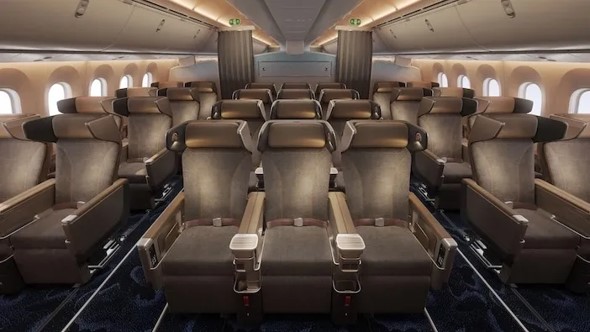 China Airlines 787 Premium Economy: Style, Space and 4K Tech
  United Unveils New Chef-Curated Menu Items for Polaris Business
 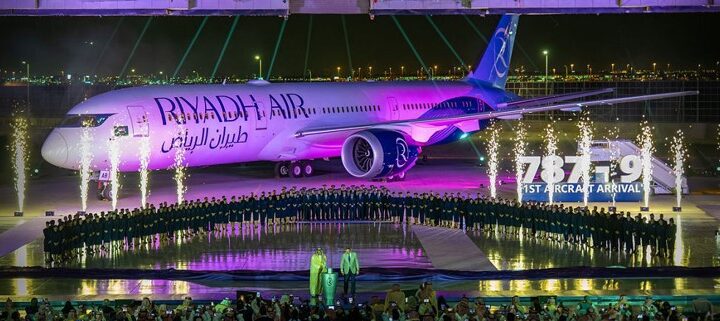 Riyadh Air Opens Tickets to Five New Dreamliner Routes
 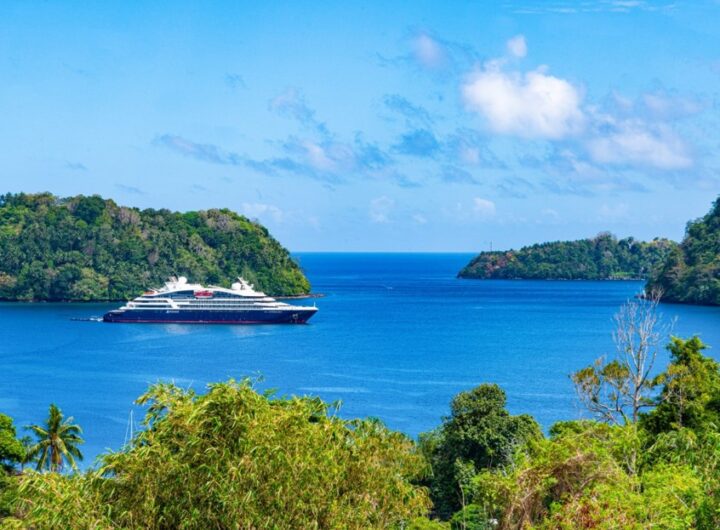 PONANT Expands Asia Luxury Expeditions for 2026–2028
 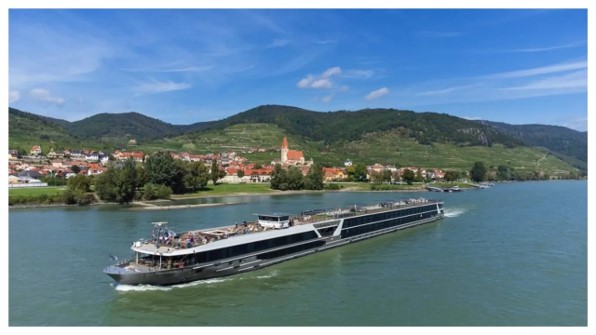 Travelmarvel Debuts Rigel: Fourth European River Ship for Aussies
  Marella Discovery 2 Goes Adults Only With Bold New Spaces
  Six Senses Fiji Detox: Restore, Reconnect & Reset in Paradise