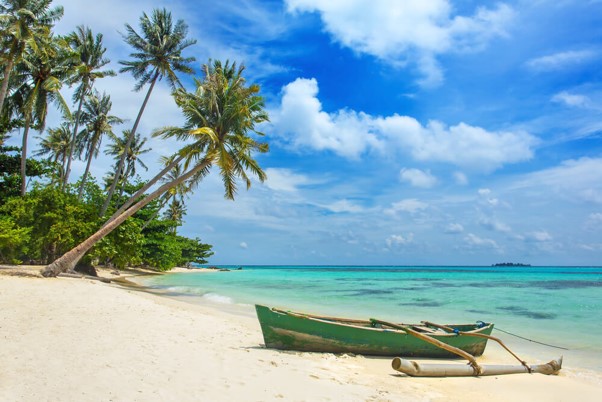
Photo credit: Dini
A secret necklace in the Java Sea
Java Sea islands
Off the north coast of Central Java, the Karimunjawa archipelago stretches across the Java Sea like a broken string of pearls – 27 islands of white sand, mangrove forest and impossibly clear water that still feel far from Indonesia’s mainstream tourist trail. Just a handful of these islands are permanently inhabited, leaving long, quiet shorelines, coral gardens and sandbars that appear and disappear with the tide.
Protected as Karimunjawa National Marine Park, the area covers more than 110,000 hectares of reefs, seagrass, mangroves and sea beds dropping from 15 to 40 metres, making it a haven for snorkellers, divers and anyone chasing that “lost in time” island feeling. Locals link its name to the old Javanese phrase “kremun‑kremun saking tanah Jawi” – the hazy silhouette of land seen from afar through sea mist – a fitting description for a place that still feels half‑dreamed.
Karimunjawa Island: markets, mosques and sunset grills
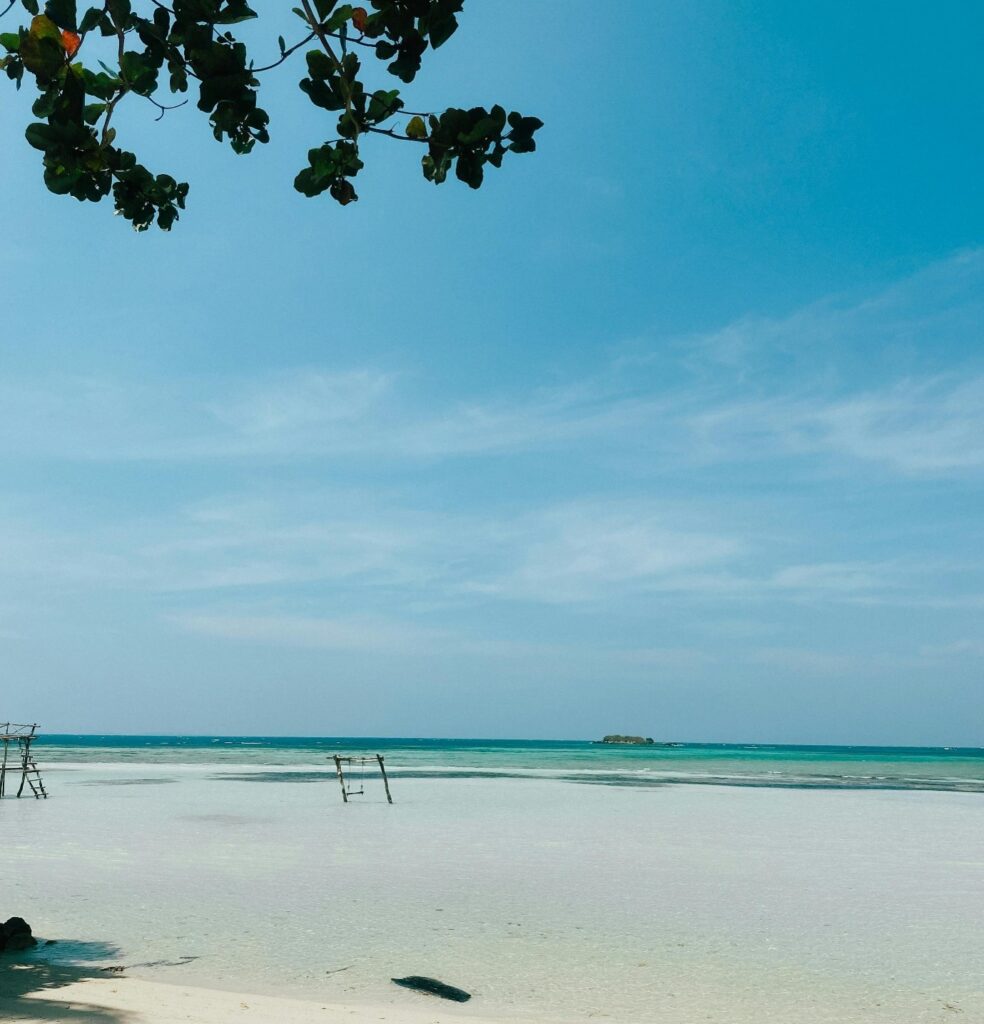
The main island, Karimunjawa, is the archipelago’s heartbeat. This is where ferries arrive from Java, where you’ll find homestays and small resorts, warungs and night markets, and a harbour packed with bright wooden fishing boats. Inland, the scenery shifts between low hills, rice paddies and simple village roads, while the coast unravels into light‑sand beaches and rocky headlands.
As the heat drains out of the day, grills fire up near the port, loaded with the catch of the day and brushed with spicy sambal. Sitting on mats a few steps from the sea, eating still‑sizzling fish while the call to prayer drifts over the water, you understand why many travellers end up staying far longer than planned.
Where the sunsets catch fire: Tanjung Gelam
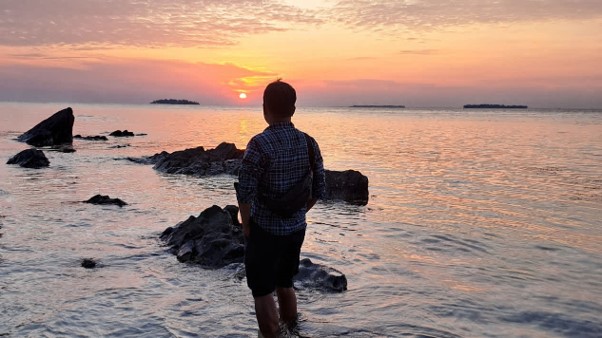
Ask locals for the best sunset, and they’ll most likely send you to Tanjung Gelam – often nicknamed Sunset Beach for obvious reasons. Facing west, this curve of sand and leaning palms becomes a front‑row seat as the sky goes from gold to deep orange and finally ink, with gentle waves lapping at the rocks.
It’s the kind of place where time slows: people wander into the shallows, photographers chase silhouettes and the last light turns the Java Sea into a sheet of molten copper.
Kemujan and the mangrove heart of the islands
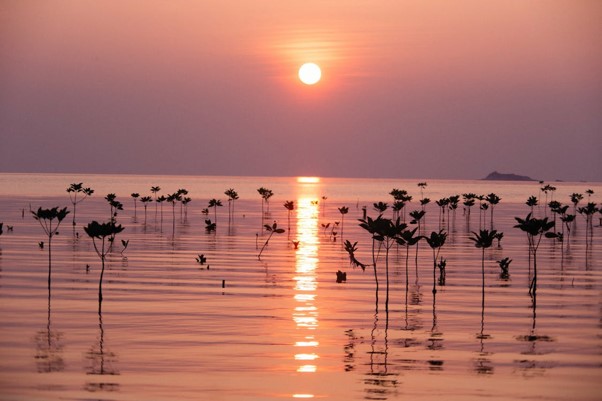
A short bridge links Karimunjawa to Kemujan, its quieter twin. Life here is slower still: tiny villages, narrow roads and low‑key beaches, plus Dewadaru Airport, which handles limited domestic flights in certain seasons.
One of Kemujan’s highlights is its mangrove forest, a vital buffer against storms and erosion and a rich ecosystem in its own right. Raised boardwalks thread through the tangle of roots and trunks, where crabs scuttle, birds shelter and the air stays cool and damp even on bright days. It’s a reminder that Karimunjawa’s beauty is as much about living systems as it is about picture‑perfect beaches.
Offshore gems: sandbanks, lagoons and casuarina groves
Tropical beach scene
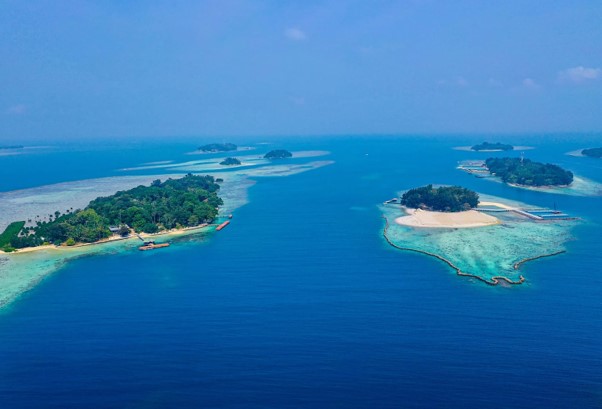
Head out by boat and Karimunjawa reveals a whole constellation of smaller islands and sand cays.
- Menjangan Besar is known for turtle conservation projects and calm, clear water where young turtles are released back into the sea, surrounded by coral heads and clouds of reef fish.
- Menyawakan is wrapped around one of the area’s most beautiful lagoons, all pale sand, sloping palms and shallow water shifting from turquoise to cobalt. When the tide drops, glass‑clear sand tongues appear, so you feel like you’re walking on water.
- Gleyang is almost flat, famous for its shifting sandbars that slice the sea into bands of blue and white. It’s the kind of place where a simple grilled‑fish lunch under the palms becomes a trip highlight.
- Cemara Kecil takes its name from the casuarina trees (“cemara”) that line its shores, creating a shady, pine‑like forest right on the beach. Their roots twist through coral sand into natural sculptures, while just offshore elkhorn corals shelter clownfish, anemones and bright starfish clearly visible even in knee‑deep water.
Practicalities: how to reach Karimunjawa
Karimunjawa belongs to Central Java province, and most travellers start from Jepara, a coastal town linked by road to Semarang – the nearest major city with an airport and rail connections. From Jepara you can choose between:
- Fast boats, taking around 2 hours in good conditions
- Traditional ferries, which can take up to 5 hours, depending on season and sea state
During the dry season (May–October), crossings are generally smoother and visibility better, though schedules can still shift with the weather. At certain times of year, small domestic flights operate into Dewadaru Airport on Kemujan, offering an alternative for those short on time, but capacity is limited and services can be seasonal.
Cash is still king on the islands, so bring enough rupiah, check transport times before you travel and build some flexibility into your itinerary – here, the sea still sets the timetable, and that’s part of the charm.
Why Karimunjawa still feels different
In an Indonesia where Bali and Lombok are firmly on the global grid, Karimunjawa remains a place that changes your pace. After a few days, you start recognising the sound of the waves before you even open your eyes. Ferry horns replace traffic noise, stars replace city lights and “plans” become something you adjust around tides, sunsets and the promise of tomorrow’s boat trip.
For detailed travel information, accommodation options and local regulations, check Indonesia’s official tourism resources and regional Java travel guides before you go.
 Riyadh Air’s Fleet Boom Signals a New Era in Luxury Flying
  Aman New York Expands Homes for Urban Luxury Living
  Silversea’s S.A.L.T. Voyages Serve Europe’s Harvest in Style
  Qantas Project Sunrise Makes History on the Melbourne Runway