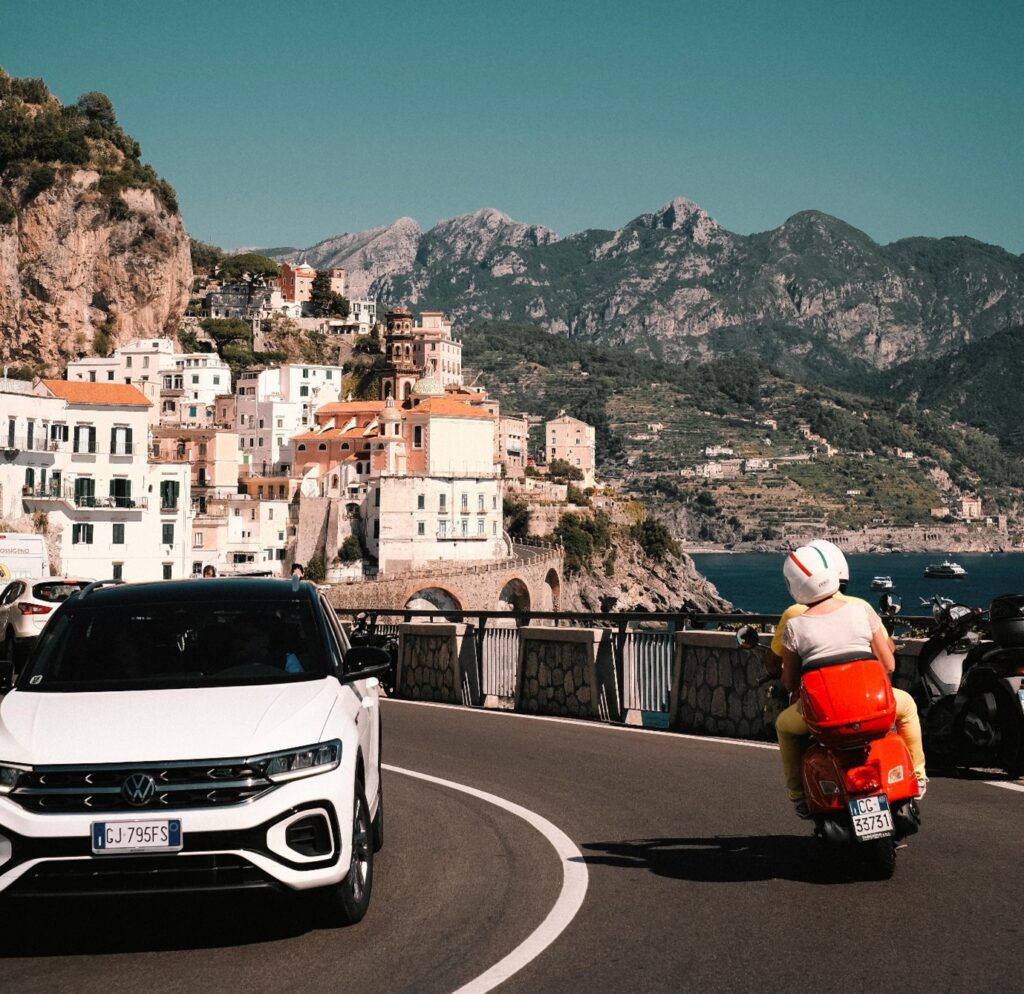
Photo courtesy: Pexels
There’s something about a European road trip that hits differently. Trains are great, sure – but rolling down a coastal road with the windows cracked, espresso still warm in the cup holder and some half-decent playlist battling the wind noise? That’s freedom. Over the last two decades, I’ve driven some ridiculous stretches of southern Europe, from cliff-hugging Italian roads to lazy Portuguese coastal highways and Andalucian white villages that appear like mirages.
These are three epic southern Europe road trips I’d happily do all over again – complete with routes, must‑see stops, planning tips, and a few honest “learn from my mistakes” moments along the way.
- Amalfi Coast & Southern Italy: Drama, Lemons and Tight Corners
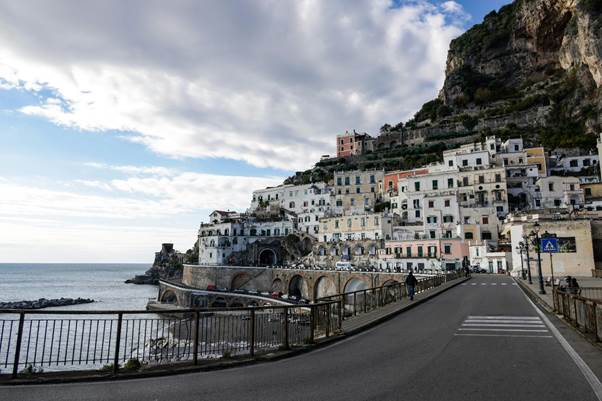
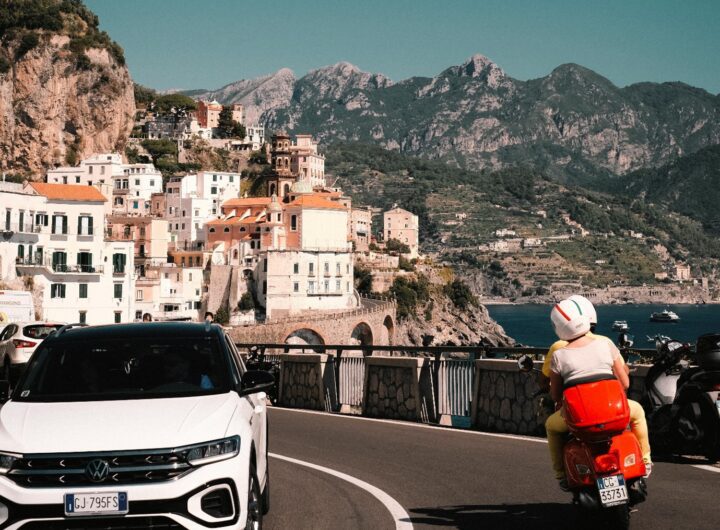
This one is not just a road trip; it’s a contact sport. The Amalfi Coast is beautiful, chaotic, and occasionally terrifying – but my word, it’s worth it.
The Route (5–7 days minimum)
- Naples → Sorrento → Positano → Amalfi → Ravello → Salerno
- Optional extra loop: Pompeii → Paestum → Cilento Coast
I started in Naples, where picking up a hire car feels slightly like a social experiment. My top tip: grab your car as you’re leaving the city, not when you land. Explore Naples car‑free first; then pick up the vehicle near the station or on the outskirts to avoid too many baptism‑by‑fire roundabouts.
From there, Sorrento eases you into coastal life: lemon groves, sunset aperitivi and just enough traffic to practise deep breathing. Once you hit the SS163 Amalfitana, things get real: hairpins, buses that definitely look too wide, and views that make you want to stop every 200 metres.
Must‑See Stops
- Sorrento – A gentle warm‑up: sunset over the Bay of Naples, limoncello tastings, and enough restaurants to ruin any diet.
- Positano – Yes, it’s crowded. Yes, it’s worth it. Park as high as you can and walk down, then ferry back if the drive feels too much.
- Amalfi & Duomo di Amalfi – Take time to wander the back alleys and actually sit with a coffee like you have nowhere else to be.
- Ravello – My personal favourite. Villa Cimbrone and Villa Rufolo at golden hour felt like stepping into a painting.
- Pompeii (and Herculaneum if you can) – Break up the coastal driving with a deep dive into history before looping back to Naples or further south.
My Road Trip Reality Check
Driving the Amalfi is like dancing with an impatient partner: you’re not quite leading, but you have to stay in step. I learned three things very quickly:
- It’s okay to pull over, take a breath and let the locals fly past.
- The views are better from the bus if you’re a nervous driver – there’s no shame in parking the car for a day.
- Don’t plan huge distances each day. The Amalfi is slow layered travel, not a race.
Best time to go: May–early June or September. July–August is pure gridlock and expensive parking.
- Portugal’s Atlantic & Algarve Coast: Laid‑Back Beaches and Golden Cliffs
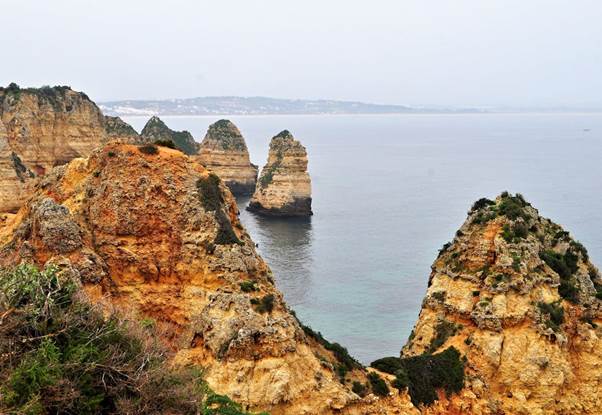
Where Italy is drama, Portugal is exhale. This road trip is all about coastal villages, sea breezes and an easy driving rhythm that makes you seriously question why you ever go back to the office.
The Route (7–10 days ideal)
- Lisbon → Cascais → Alentejo Coast (Vila Nova de Milfontes / Odeceixe) → Sagres → Lagos → Portimão → Albufeira → Tavira
I kicked off in Lisbon, picked up the car after a couple of city days, and headed straight for Cascais and the wild coastline near Cabo da Roca. It’s Europe’s westernmost point and feels like you’ve pulled up at the edge of the world.
From there, the magic is in the N120 and coastal detours. This isn’t a motorway blast; it’s a meander.
Must‑See Stops
- Alentejo Coast (Vila Nova de Milfontes / Zambujeira do Mar / Odeceixe) – My happy place. Low‑rise villages, proper local cafés, empty beaches even in busier months. I lost a day here doing absolutely nothing and regret nothing.
- Sagres – Windswept, raw and spectacular. Feels like the “end of Europe” in the best possible way.
- Lagos & Ponta da Piedade – Those famous golden cliffs and arches actually live up to the photos. Take a boat or kayak around sunrise if you can.
- Tavira – Understated, tiled and charming; a softer landing before heading back to real life.
My Road Trip Reality Check
Portugal is where I finally slowed down properly. No crazy tolls if you stick to national roads, no pressure to “see it all”, just day after day of gentle discovery. I made three very good decisions on this route:
- Always keep a swimsuit and towel in the car – spontaneous beach stops are the whole point.
- Learn a few basic phrases in Portuguese – people genuinely lit up when I tried.
- Avoid overplanning restaurants – some of the best meals came from tiny tascas I’d never find in a guidebook.
Best time to go: April–June or September–October. You get sunshine without peak‑season chaos.
3. Andalusian Loop, Spain: White Villages, Flamenco & Moorish Palaces
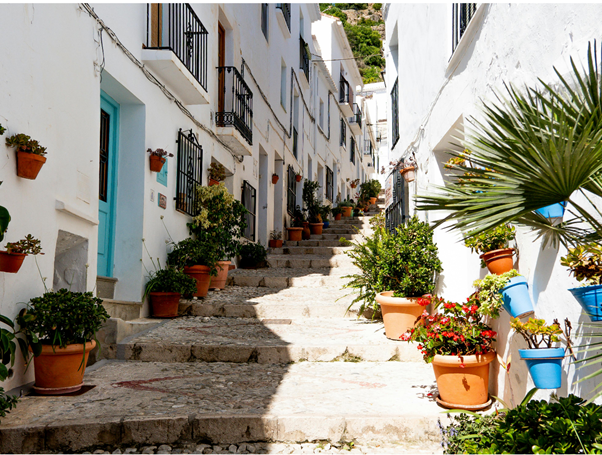
If you want culture layered on top of scenery, southern Spain delivers. This loop is about olive groves, hilltop pueblos blancos, tapas that ruin you for life, and architecture that makes you go quiet.
The Route (7–12 days depending on pace)
- Málaga → Ronda → Grazalema / Zahara de la Sierra → Seville → Córdoba → Granada → Nerja → Málaga
I started and ended in Málaga – an easy airport, car hire right at the terminal, and a gentle coastal introduction before heading inland.
Must‑See Stops
- Ronda – The town that made me actually pull over to just stare: El Tajo Gorge and Puente Nuevo are ridiculous in person. Stay at least one night.
- Grazalema / Zahara de la Sierra – Proper white‑village energy. Winding roads, vultures circling overhead, and café terraces where time doesn’t exist.
- Seville – A city I instantly wanted to move to. Plaza de España at sunset is non‑negotiable. Book a flamenco show in a small peña, not just the tourist circuit.
- Córdoba – The Mezquita is one of those places that stays with you. Go right at opening – watching it slowly fill while you wander the striped arches in silence is special.
- Granada – The Alhambra will be crowded, yes, but the view from Mirador de San Nicolás at sunset feels like a scene from a film.
- Nerja / Frigiliana – Coastal breather and pretty village combo before looping back to Málaga.
My Road Trip Reality Check
Andalusia is where I realised that long lunches are a legitimate form of sightseeing. Three things I learned quickly:
- Don’t underestimate distances – an hour on Google Maps often becomes 90 minutes once you add photo stops and mountain roads.
- Eat where the menu isn’t translated – every time I did, I won.
- Build in proper “no-driving” days in Seville and Granada – you’ll want to walk, wander and just be.
Best time to go: March–May or October. July–August can be brutally hot inland.
Practical Tips for Planning a Southern Europe Road Trip
A romantic road trip is great; a well-planned one is even better. A few practicalities I keep coming back to:
1. Choose the Right Car (and Insurance)
- Go smaller rather than bigger. On the Amalfi Coast or in old towns, a compact car is your best friend.
- Always take full insurance with minimal excess – southern Europe’s car parks and tight streets are… character-building.
2. Understand Tolls & Vignettes
- Italy, Spain and Portugal use toll booths or electronic tolls on major motorways.
- If you’re happy to go slower, national roads are often more scenic and free.
- Always have a payment plan for tolls: card, cash or a hired toll tag.
3. Book Your Bases, Not Every Night
My favourite trips came from booking a few strategic bases (e.g. 3 nights Amalfi, 3 nights Alentejo, 3 nights Seville) and then exploring in loops. It gives you:
- Flexibility for weather and mood.
- Less packing/unpacking.
- Space for those days when you just want to sit in a café with no agenda.
4. Drive Smart, Especially on Coastal & Mountain Roads
- Avoid night driving on unfamiliar coastal roads.
- Take breaks – fatigue hits faster on twisty stretches.
- If locals are flying up behind you, just pull into a lay‑by. There’s no prize for “keeping up”.
5. Give Yourself Permission to “Miss” Things
You will not see everything. You will skip “must‑see” places. And that’s okay. Some of my best memories aren’t of the headline stops, but of random detours:
- A nameless beach in Portugal with three other people on it.
- A bar in Seville where the bartender decided I needed to taste my way through sherries.
- A café in a tiny Italian village where an older couple insisted I try their homemade limoncello.
Those moments never make the brochure, but they’re the ones you carry home.
Final Thoughts: Why Southern Europe Belongs on Your Road Trip List
If there’s one thing these three road trips taught me, it’s that southern Europe rewards slowness. The joy isn’t just in ticking off Amalfi, Algarve or Andalusia – it’s in the quiet in‑between: the wrong turns, the unexpected viewpoints, the conversations that happen when you linger instead of rushing.
Whether you’re chasing coastal drama in Italy, laid‑back Atlantic vibes in Portugal, or Moorish palaces and white villages in Spain, a road trip gives you something no tour or train can: control of the pace, the playlist and the pauses.
So consider this your nudge: pick a route, book the car, leave room for detours – and go write your own southern Europe road story.
 10 Most Beautiful (and Exclusive) Beaches in the World – And How to Reach Them from Australia
  The Sense Experience Resort: Tuscan Beach Sanctuary Nominated for 2026 Travel + Leisure World’s Best Awards
  Milano Cortina 2026 Venues: Complete Guide to Olympic and Paralympic Sites in Lombardy, Veneto and Trentino‑Alto Adige
  Don Carlos Marbella Reborn: Inside the Costa del Sol’s New Era of Mediterranean Luxury
  Discover Authentic Sardinia in Ogliastra: Hidden Villages & Coastline from Arbatax Park Eco Resort
  Bucket‑List Luxury in 2026: Iconic Stays and Once‑in‑a‑Lifetime Experiences
  Explora Journeys’ Mediterranean & Western Europe 2026: Luxury Sailings with Up to 30% Savings
  Seabourn’s “Yours to Explore” Event: Free Suite Upgrades and Up to US$1,000 Credit on 500+ 2026 Voyages
  Three Epic Southern Europe Road Trips: Routes, Tips & Stories from the Open Road
  Inside Delta’s New Denver Sky Club: A 13,000‑Square‑Foot Rocky Mountain Retreat at DEN