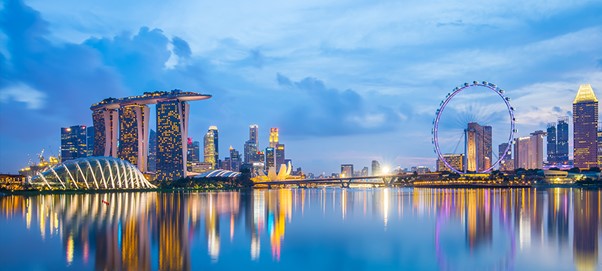
When most people think of Singapore, they picture futuristic skyscrapers, immaculate streets and icy‑cold air‑conditioning. Yet just beyond the Lion City’s glass and steel, a different Singapore awaits: a quiet world of offshore islands where kampung life lingers, coral reefs thrive and legends smell of salt and sea breeze.
Pulau Ubin: Singapore’s last rustic kampung
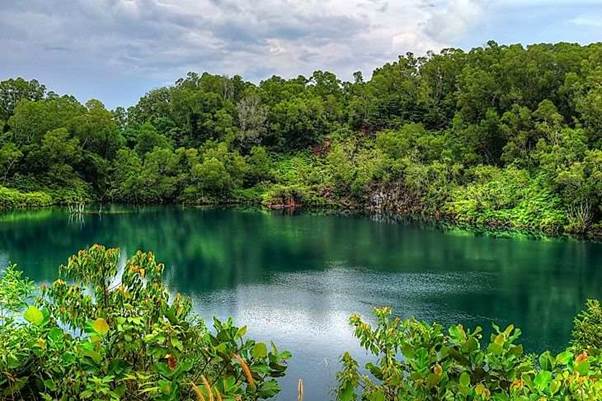
Photo courtesy: Worldatlas
Emerald quarry lake surrounded by dense green forest in Pulau Ubin, Singapore
Pulau Ubin, off Singapore’s north‑east coast, feels like stepping into a time capsule, back before the economic boom of the 1970s. Wooden houses on stilts, zinc roofs and dirt tracks lined with coconut palms and rubber trees paint a vivid picture of the country’s rural past. Old granite quarries, once the backbone of local industry, have filled with rainwater to form emerald‑green lakes, now home to birds and monitor lizards.
Here, you swap malls for mangroves and MRT lines for cycling trails, drifting through kampung lanes where life still moves slowly and neighbours greet each other by name.
How to get there: Take the MRT to Tanah Merah or Pasir Ris, then a bus or taxi to Changi Point Ferry Terminal. From there, bumboats (shared water taxis) run to Pulau Ubin in about 10 minutes, usually from early morning to late afternoon.
St John’s Island & Lazarus: from quarantine to Caribbean-blue coves
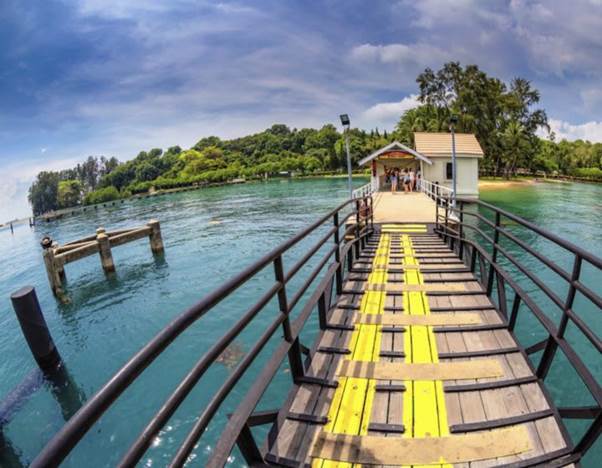
St. John’s Island jetty extending over turquoise lagoon with people at wooden pier house
Part of the Southern Islands, St John’s Island once served as a quarantine station and later as a rehabilitation centre, giving it a history steeped in arrivals, departures and second chances. Today, its low‑rise buildings, orderly paths and shady trees frame quiet lagoons and emerald shallows, with peacocks strutting along the walkways and the National Marine Laboratory anchoring its new role as a hub for marine research.
A short causeway leads from St John’s to Lazarus Island, where the atmosphere changes in an instant. The neat paths fall away and a sweeping crescent of powdery sand appears, lapped by water that shifts from turquoise to deep blue within a few metres. With hardly any development beyond palms and coastal scrub, Lazarus feels more like the Caribbean than one of the world’s busiest ports, a closely guarded secret for locals who prefer its peace to crowded city parks.
How to get there: Public ferries to St John’s depart from Marina South Pier. Some services also stop at Kusu and Lazarus; check schedules in advance.
Sentosa: from “island of death” to resort playground
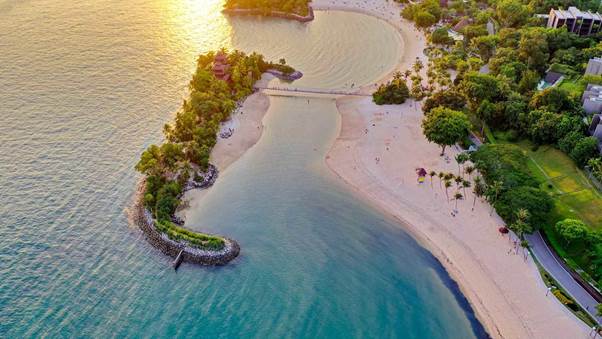
Aerial view of curved sandy beach and turquoise lagoon at Sentosa Island’s Palawan Beach, Singapore
Long before it became Singapore’s resort‑and‑theme‑park hub, Sentosa was known as Pulau Blakang Mati, “the island of death behind”—a name likely tied to outbreaks of disease or piracy in centuries past. During World War II, the British built Fort Siloso here to guard the harbour; its tunnels, gun batteries and bunkers still stand today, now woven into landscaped grounds and museum spaces.
Modern Sentosa layers luxury resorts, golf courses and attractions over this military past, yet its beaches at Palawan and Tanjong still exude tropical charm. Man‑made they may be, but with gently curving bays, soft sand, palm trees and rock islets you can reach via bridges or a short swim, they deliver that easy holiday‑island feel just minutes from the city.
How to get there: Reach Sentosa via the Sentosa Express monorail from VivoCity, by cable car from Mount Faber/HarbourFront, on foot via the Sentosa Boardwalk, or by car/taxi.
Sisters’ Islands: Singapore’s first marine park
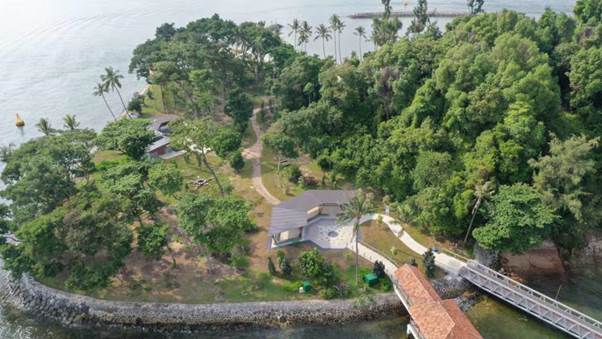
Aerial view of Sisters’ Islands Marine Park with small buildings, bridge, and surrounding tropical greenery and sea
Local legend tells of two devoted sisters who drowned in a storm and were transformed into twin islands so they could remain together forever. Myth aside, the currents around Sisters’ Islands are very real—and powerful—creating ideal conditions for Singapore’s very first national marine park.
Beneath the surface, over 250 species of hard coral form reefs that support clouds of reef fish in every colour. Seahorses, nudibranchs, giant clams and even shy carpet sharks weave through coral mazes, protected by strict conservation rules that limit human impact. For a glimpse of what Singapore’s seas once looked like across the region, this is the place to start.
How to get there: Access is via licensed operators and organised trips (often diving or guided visits) departing from mainland marinas; individual walk‑in visits are often limited due to protection rules. Check the Sisters’ Islands Marine Park website or NParks‑approved tour providers.
Kusu Island: temples, shrines and turtle lore
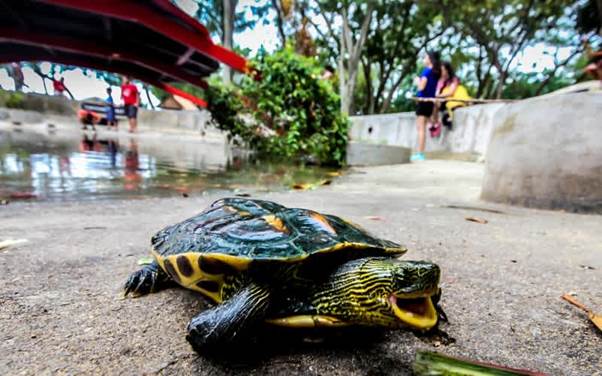
Close-up of green sea turtle with yellow markings on sandy ground near water, Kusu Island Singapore
Kusu Island—“tortoise island” in Chinese—owes its name to a legend of a giant turtle that turned itself into an island to save two shipwrecked sailors, one Malay and one Chinese. That dual heritage lives on in the island’s spiritual landmarks: the Tua Pek Kong temple from 1923 draws Taoist devotees during the ninth lunar month, while three Malay kramats dedicated to Islamic holy men sit atop a hill reached by a long flight of steps.
The juxtaposition of Chinese temple architecture and simple Malay shrines captures Singapore’s religious harmony in miniature. Visitors still spot sea turtles in the surrounding waters and leave small offerings in gratitude, keeping the old stories alive.
How to get there: Ferries to Kusu often operate seasonally and especially during the annual Kusu pilgrimage (ninth lunar month), typically via Marina South Pier. Check timings and routes in advance.
Why Singapore’s islands should be on your itinerary
From Pulau Ubin’s kampung trails to Lazarus’ crescent of white sand, from Sentosa’s fort‑turned‑resort to Sisters’ Islands’ underwater gardens and Kusu’s turtle legends, Singapore’s islands reveal a side of the city that most visitors never see. They’re close enough for easy day trips yet far enough to feel like another world—one of mangroves, myths and sea‑salted breezes just beyond the skyline.
 Three Epic Southern Europe Road Trips: Routes, Tips & Stories from the Open Road
  10 Most Beautiful (and Exclusive) Beaches in the World – And How to Reach Them from Australia
  Milano Cortina 2026 Venues: Complete Guide to Olympic and Paralympic Sites in Lombardy, Veneto and Trentino‑Alto Adige
  Bucket‑List Luxury in 2026: Iconic Stays and Once‑in‑a‑Lifetime Experiences
  Chasing Endless Summer: 5 Sizzling Hotspots Where the Sun Never Takes a Break
  Eight Reasons Ireland in Winter Should Be on Your 2026 Travel List
  The Ritz-Carlton Yacht Collection Unveils Ultra-Luxury Winter 2027–2028 Voyages Aboard Evrima, Ilma and Luminara
 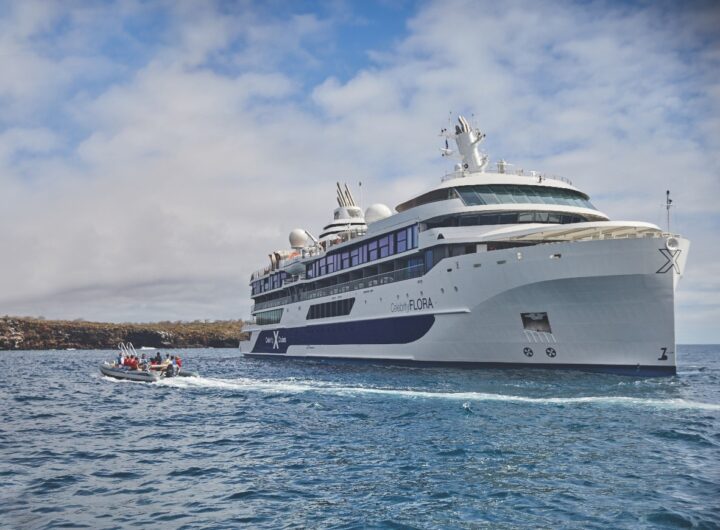 Celebrity Cruises Opens 2028 Galapagos Expeditions on Celebrity Flora: Bucket‑List Small‑Ship Adventures Now on Sale
 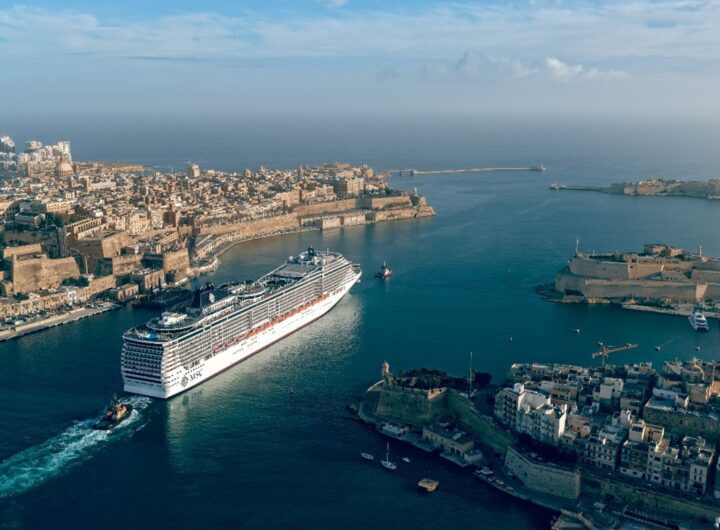 MSC Cruises Elevates MSC Yacht Club Dining With Elegant New Restaurants Across Fantasia-Class Ships
 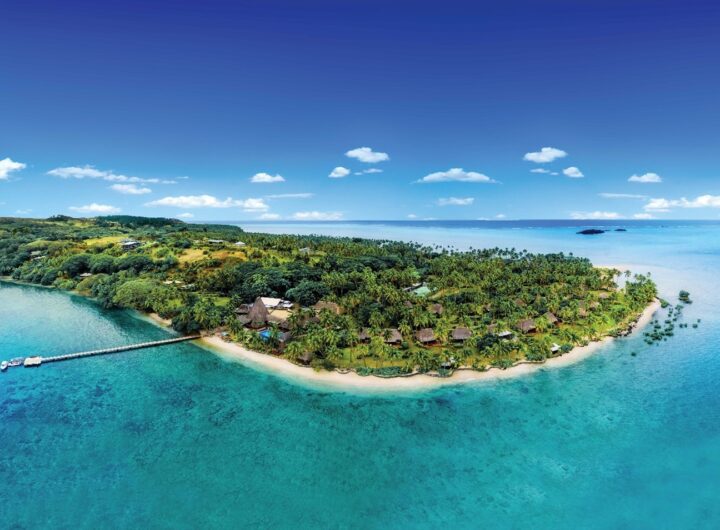 Jean-Michel Cousteau Resort Fiji Reopens After Multi‑Million‑Dollar Makeover With New Two‑Bedroom Family Bures