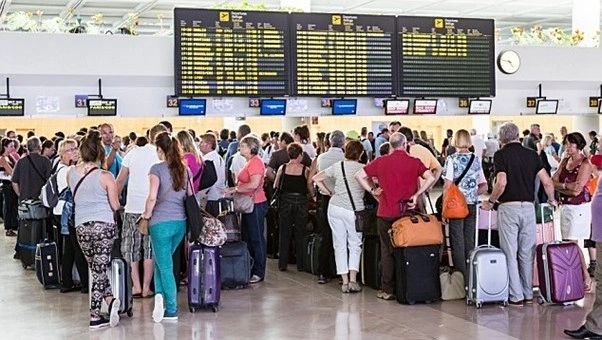
IATA has warned of potential airport chaos unless governments move quickly to adopt digital processes to manage travel health credentials (COVID-19 testing and vaccine certificates) and other COVID-19 measures.
- Pre-COVID-19, passengers, on average, spent about 1.5 hours in travel processes for every journey (check-in, security, border control, customs, and baggage claim).
- Current data indicates that airport processing times have ballooned to 3 hours during peak time with travel volumes at only about 30% of pre-COVID-19 levels. The greatest increases are at check-in and border control (emigration and immigration) where travel health credentials are being checked mainly as paper documents.
- Modelling suggests that, without process improvements, the time spent in airport processes could reach 5.5 hours per trip at 75% pre-COVID-19 traffic levels, and 8.0 hours per trip at 100% pre-COVID-19 traffic levels.
“Without an automated solution for COVID-19 checks, we can see the potential for significant airport disruptions on the horizon,” said Willie Walsh, IATA’s Director-General. “Already, average passenger processing and waiting times have doubled from what they were pre-crisis during peak time—reaching an unacceptable three hours. And that is with many airports deploying pre-crisis level staffing for a small fraction of pre-crisis volumes. Nobody will tolerate waiting hours at check-in or for border formalities. We must automate the checking of vaccine and test certificates before traffic ramps up. The technical solutions exist. But governments must agree on digital certificate standards and align processes to accept them. And they must act fast.”
Over the past two decades, air travel has been reinvented to put passengers in control of their journeys through self-service processes. This enables travellers to arrive at the airport essentially “ready to fly”. And with digital identity technology, border control processes are also increasingly self-service using e-gates.
Paper-based COVID-19 document checks would force travellers back to manual check-in and border control processes that are already struggling even with low volumes of travellers.
If Governments require COVID-19 health credentials for travel, integrating them into already automated processes is the solution for a smooth restart. This would need globally recognized, standardized, and interoperable digital certificates for COVID-19 testing and vaccine certificates.
Digitalized certificates have several advantages:
- Avoiding fraudulent documentation.
- Enabling advance “ready-to-fly” checks by governments.
- Reducing queuing, crowding, and waiting time in airports through integration with self-service check-in (via the internet, kiosks or mobile phone apps).
- Increasing security through integration with digital identity management being used by border control authorities.
- Reducing the risk of virus transmission via the person-to-person exchange of paper documents.
The G20 has identified a similar solution. The G20 Rome Guidelines for the Future of Tourism call for a common international approach on COVID-19 testing, vaccination, certification, and information as well as promoting digital traveller identity.
The G7 discussions, which commence on 11 June, are the next opportunity for leading governments to develop a solution around four key actions by agreeing to:
- Issue vaccination certificates based on World Health Organization (WHO) Smart Vaccine Certificate data standards including QR codes
- Issue COVID-19 test certificates in accordance with the data requirements set out by the International Civil Aviation Organization (ICAO)
- Accept digital COVID-19 test and vaccine certificates at their borders
- Where governments require airlines to check travel credentials, governments should accept traveller friendly apps, such as the IATA Travel Pass, to efficiently facilitate the process.
“This cannot wait,” said Walsh. “More and more people are being vaccinated. More borders are opening. Booking patterns tell us that pent-up demand is at extremely high levels. But governments and the competent authorities are acting in isolation and moving far too slowly. A smooth restart is still possible. But governments need to understand the urgency and act fast.”
IATA asks the G7 to work with the air transport industry to take leadership in restarting the global travel sector. By engaging with the air transport industry, we can ensure that government requirements for safe travel are met with solutions that can be efficiently operationalized.
“A good first step would be G7 agreement, with industry input, on a common set of COVID-19 travel requirements. The next step would be implementing and mutually recognizing those requirements. If the G7 took these leadership measures, the freedom to travel could be seamlessly restored for about a third of all journeys. Other countries could build on that leadership for a safe and efficient global restart of connectivity,” Walsh added.
By Joe Cusmano

 Etihad Upgrades All Australia Flights to Its Newest Business Class Suites
  Cathay Strengthens Global Sustainability Leadership With Record SAF Commitments in 2025
  United Showcases Starlink Wi‑Fi in Big Game Ad as 300+ Regional Aircraft Go Online
  Qantas Launches Major Regional Lounge Refresh Program Across Seven Australian Airports
  Virgin Australia Launches ‘Extra Comfort, Zero Imitation’ Sale With Economy X Upgrades From Just $15
 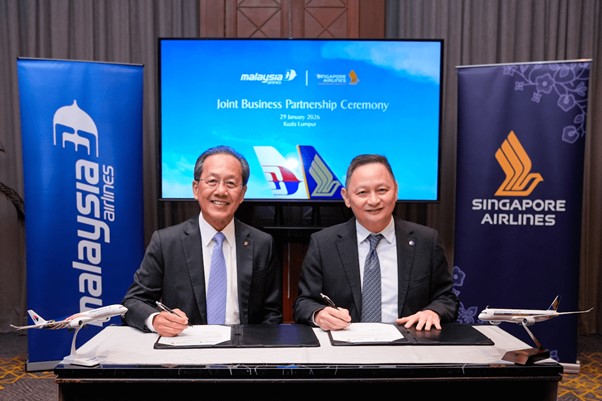 Malaysia Airlines and Singapore Airlines Elevate Regional Travel With Refined Joint Business Partnership
  AmaWaterways Launches Fresh Brand Identity, Encouraging River Cruisers to ‘Follow Their Own Current’
  Marriott Bonvoy Launches Global Promotion Offering Bonus Points and Elite Night Credits Across 30+ Brands
  MSC Cruises to Stream 2026 Global Soccer Tournament Live Across Its Entire Fleet This Summer
  Five Reasons to Visit Kamalaya Now: Inside the Next Era of Thailand’s Legendary Wellness Sanctuary