Photo courtesy: Tourism Ireland
Ireland in winter is like a best-kept secret: softer light, fewer crowds, roaring pub fires and landscapes that feel even more dramatic under a low sun. Temperatures are milder than many travellers expect, making it a brilliant time for Australians to swap the Southern Hemisphere heat for crisp mornings, cosy nights and a completely different side of the Emerald Isle.
It’s not that cold
Thanks to the Gulf Stream, Ireland’s winters are relatively mild compared to much of northern Europe, with cool, damp days rather than brutal snow and ice. On clear mornings, you can stroll cliff‑top trails on Achill Island along the Wild Atlantic Way, follow the story-rich Causeway Coast, or roam castle ruins in Ireland’s Ancient East under bright blue skies and low golden light. And if a rare dusting of snow appears, it just adds another layer of magic – you’ll simply need a good coat, scarf and boots.
2. Comfort food that actually comforts

Winter is when Irish food really comes into its own: think steaming bowls of Irish stew, creamy seafood chowder and crusty bread eaten beside a pub fire. In County Cork, spiced beef is the seasonal star, cured with sugar, spices and berries – you’ll find it at stalls like the English Market in Cork city or from butchers such as McCarthy’s of Kanturk, sometimes finished with Guinness and cider for extra depth. Pair all that with a pint of stout or a hot whiskey and you’re warmed from the inside out.
3. City breaks that glow in winter
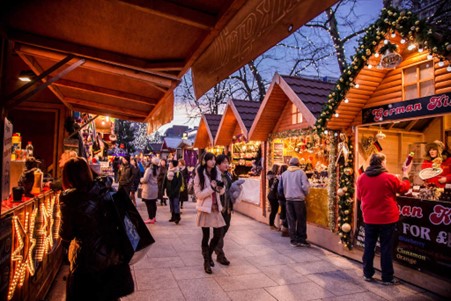
In winter, Irish cities feel extra inviting, with festive lights, Christmas markets and buzzing cultural calendars. Dublin’s Grafton Street sparkles, while the New Year’s Festival turns the city into a two‑day celebration of music, light shows and family events. Up north in Belfast, you can catch a show at the MAC, wander the Christmas Market at City Hall or book a decadent afternoon tea at Titanic Belfast; Waterford’s Winterval, meanwhile, transforms a compact Viking city into a full‑blown winter wonderland.
4. Landscapes that look made for fantasy
Winter light flatters Ireland’s wildest corners, from the white‑capped Mourne Mountains in County Down – said to have helped inspire CS Lewis’s Narnia – to snow‑tipped Croagh Patrick in County Mayo. On the Beara Peninsula in County Cork, Atlantic storms send waves crashing against a jagged coastline, creating spectacular viewing from behind a windscreen or a cliff‑top walking trail. With shorter days and longer dusks, you’ll find yourself stopping often just to take in the views.
5. Pubs that hum on cold nights
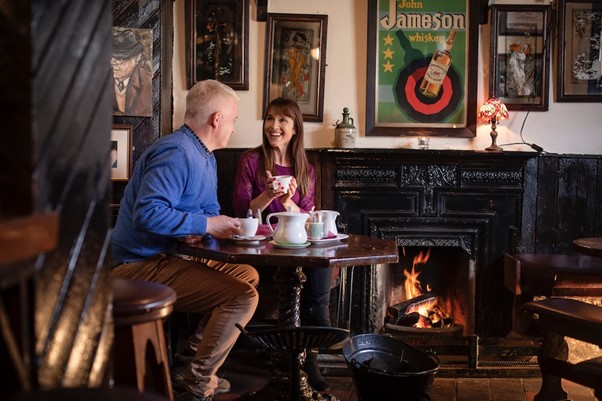
When the temperature drops, everyone heads to the pub – and visitors are always welcome to join. In Cork city, spots like An Spailpín Fánach are known for traditional music sessions where locals gather with fiddles, flutes and bodhráns for tunes that can run late into the night. Around Strangford Lough in County Down, places such as Saltwater Brig offer hot whiskeys, local chat and sometimes pancakes straight off the griddle: the very definition of Irish winter hospitality.
6. A winter solstice you’ll never forget
Ireland’s connection to the winter solstice runs back over 5,000 years, and nowhere shows it more dramatically than Newgrange in County Meath’s Brú na Bóinne. Each year, a small number of lottery winners are allowed inside the passage tomb at dawn as a shaft of sunlight travels along the passage and illuminates the inner chamber – a feat of prehistoric engineering that still feels otherworldly. Elsewhere, passage tombs at Slieve Gullion in Armagh and stone rows at Beaghmore in Tyrone also align with solstice light, offering atmospheric alternatives in ancient landscapes.
7. Cosy stays you’ll talk about for years

Winter is the perfect excuse to book somewhere with character: a lightkeeper’s cottage, a country house or a historic estate. Along the Antrim Coast, you can stay in places like Blackhead Lightkeeper’s House for front‑row views of the Irish Sea and a sense of old‑world isolation with modern comforts. In County Sligo, grand country homes such as Temple House offer roaring fires, lake views and the feeling of being a guest rather than just a room number.
8. A chance (yes, really) to see the Northern Lights
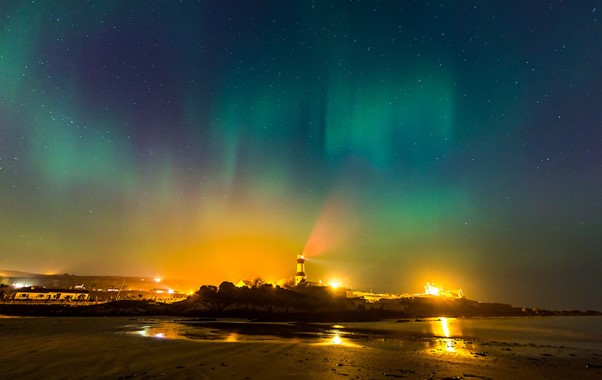
You don’t have to go all the way to Norway or Iceland to chase the Aurora Borealis – in strong solar conditions, the Northern Lights can be seen from Ireland’s far north. The Inishowen Peninsula in County Donegal, including Malin Head, is one of the best spots thanks to its latitude, low light pollution and big skies over the Atlantic. There are no guarantees, but winter brings the longest hours of darkness, and Aurora alert sites and apps can give you a heads‑up when conditions look promising.
For Australians planning a Northern Hemisphere winter escape, Ireland offers just the right mix: mild(ish) weather, great value in the off‑season, and a slower, more intimate way to experience its cities, coastlines and culture without the summer crowds.
 Three Epic Southern Europe Road Trips: Routes, Tips & Stories from the Open Road
  10 Most Beautiful (and Exclusive) Beaches in the World – And How to Reach Them from Australia
  Milano Cortina 2026 Venues: Complete Guide to Olympic and Paralympic Sites in Lombardy, Veneto and Trentino‑Alto Adige
  Bucket‑List Luxury in 2026: Iconic Stays and Once‑in‑a‑Lifetime Experiences
  Where Is Hot in Europe in winter 2026? Top Winter-Sun Capital Cities Revealed
  Chasing Endless Summer: 5 Sizzling Hotspots Where the Sun Never Takes a Break
  Explora Journeys’ Mediterranean & Western Europe 2026: Luxury Sailings with Up to 30% Savings
  Seabourn’s “Yours to Explore” Event: Free Suite Upgrades and Up to US$1,000 Credit on 500+ 2026 Voyages
  Inside Delta’s New Denver Sky Club: A 13,000‑Square‑Foot Rocky Mountain Retreat at DEN