
As of November 1st, Bloomberg reported that Cathay Pacific had resumed some routes that previously involved flying across Russian airspace.
As a result, for the first time since February, when restrictions were put in place in response to Russia’s invasion of Ukraine, the airline will restart operations over the polar regions.
In the beginning, the measure only applied to European airlines. However, after that, South Korean and Japanese aircraft started avoiding the area out of concern for their operations.
Because of the scenario, regular aircraft routes had to be rescheduled, and in some instances, services were effectively stopped. Russia’s airspace is strategically important because of its size and position, especially since shorter travel times are conceivable along routes near the Arctic Circle. Because of this, air travel between Asia and Europe and North America was severely disrupted by the closure.
However, Chinese, Indian, Turkish, and Middle Eastern airlines crossed Russian airspace without trouble.
Polar routes reduce flying time and boost efficiency.
Cathay Pacific will once again utilise the so-called polar routes. The initial phase of its operation will involve flying across parts of the eastern sector of Russian airspace en route between Hong Kong and New York airports. When asked about the change back to regular flights, the company cited headwinds and difficulties carrying the appropriate payload as the main reasons.
Cathay Pacific has stated that this decision was made to provide “a safer and more efficient operation” for its employees and passengers. Since polar routes need much less overall travel time, they are optimal for optimising passenger and cargo loads.
Originally scheduled to fly between New York and Hong Kong, the airline stated in March that it would instead be taking a different route. With the new route, you’ll be flying across the Atlantic Ocean and then crossing into European airspace over the island of Great Britain. After passing through Western Europe, the path would go across Asia. The airline could avoid flying through Greenland, the Arctic Ocean, Russia, and Mongolia in this way.
Cathay Pacific followed in the footsteps of numerous other Asian and European airlines back then.
Source: Bloomberg
 Jetstar BidCash: How to Upgrade to 787 Business Class From Just $180
  Qantas Tightens Lounge Access for Jetstar Flyers from July 2026: What Frequent Travellers Need to Know
 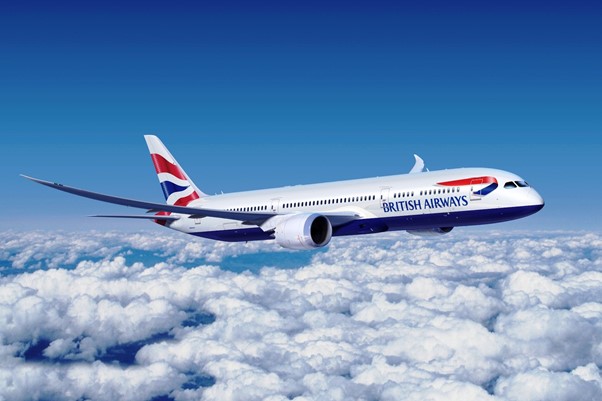 British Airways Returns to Melbourne: New Daily London–Melbourne Flights via Kuala Lumpur on the 787-9 Dreamliner
  World’s Best Airlines 2026: Qatar, Lufthansa, HK Express and Jetstar Lead AirlineRatings’ Global List
  Australia to Europe: The Most Notable Airline Routes (And How To Book Around the Chaos)
  United x Chef’s Table: World-Renowned Chefs Elevate United Polaris Inflight Dining With Exclusive New Menus
  MSC Poesia Brings Alaska to the Table: New Menus and Dining Venues for 2026 Inaugural Season
  Quiet Luxury Escapes: Wellness-Focused Stays in Costa Rica, Trinidad & Tobago and Hidden-Corner Italy
  Princess Cruises Unveils New ‘North to Alaska’ Experiences for 2026 – Biggest Alaska Season Yet
 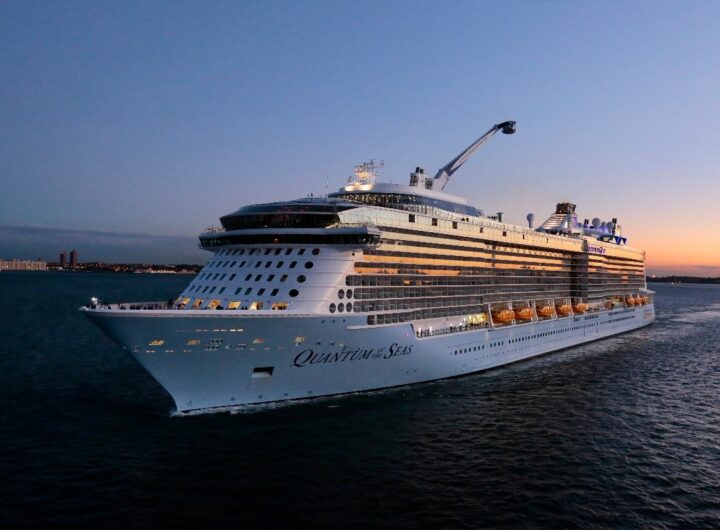 Quantum of the Seas Returns to Singapore in 2027–28: Bold Asia Cruises for Every Generation